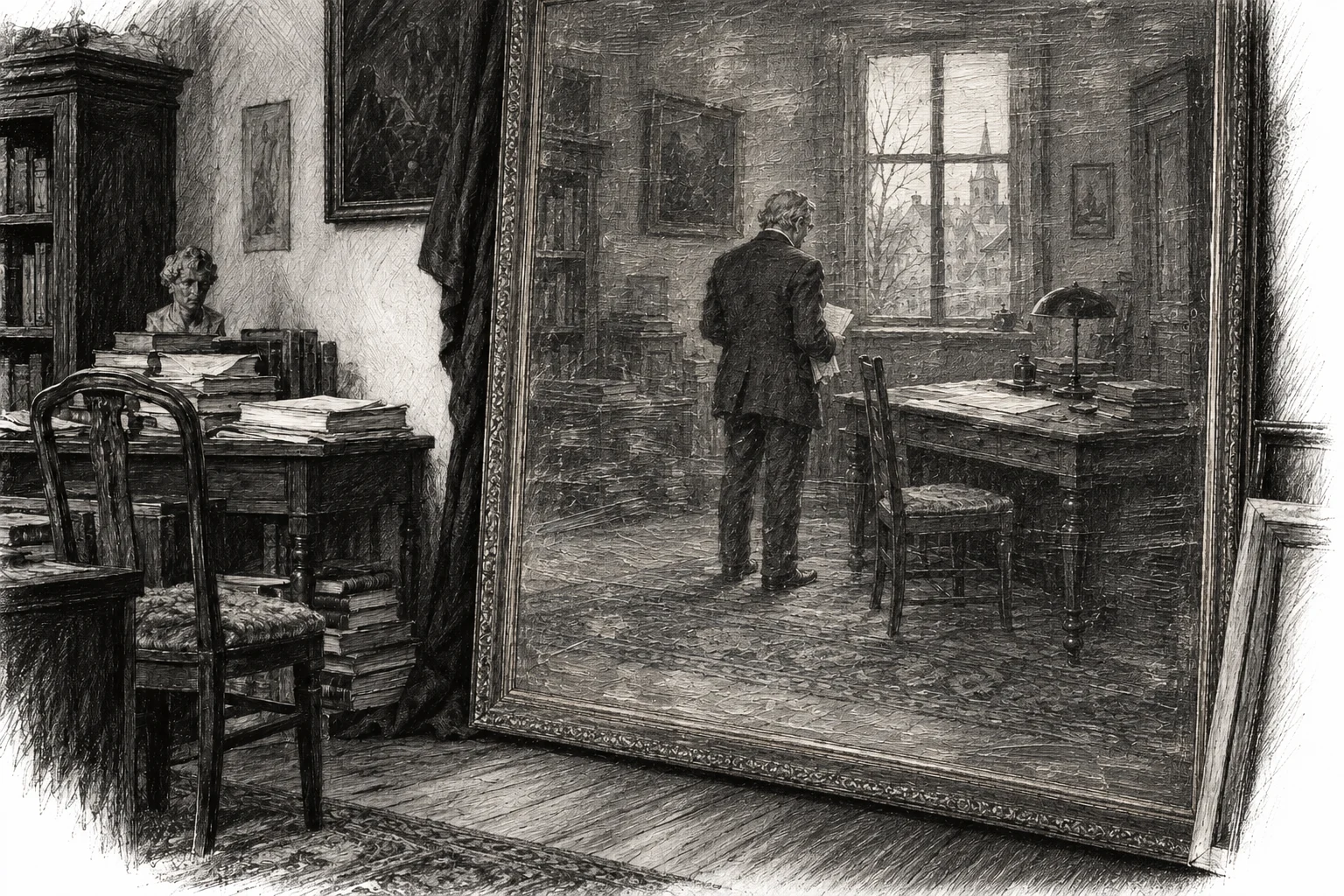
Thirty-nine pages. Twelve sections. Three editors who can no longer stand outside the story they have arranged.
Prelude · Three novels · Postlude
The work returns to the table
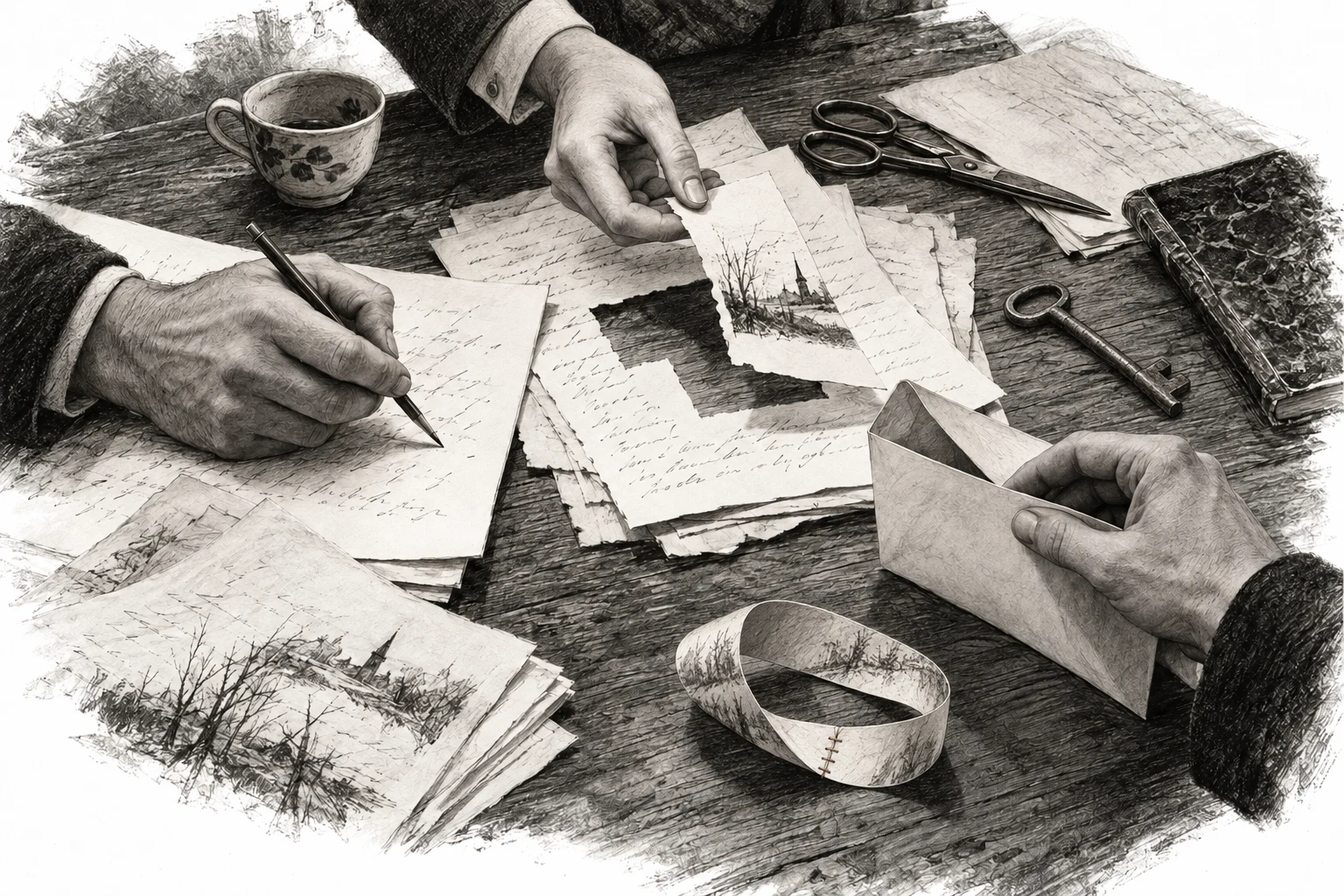
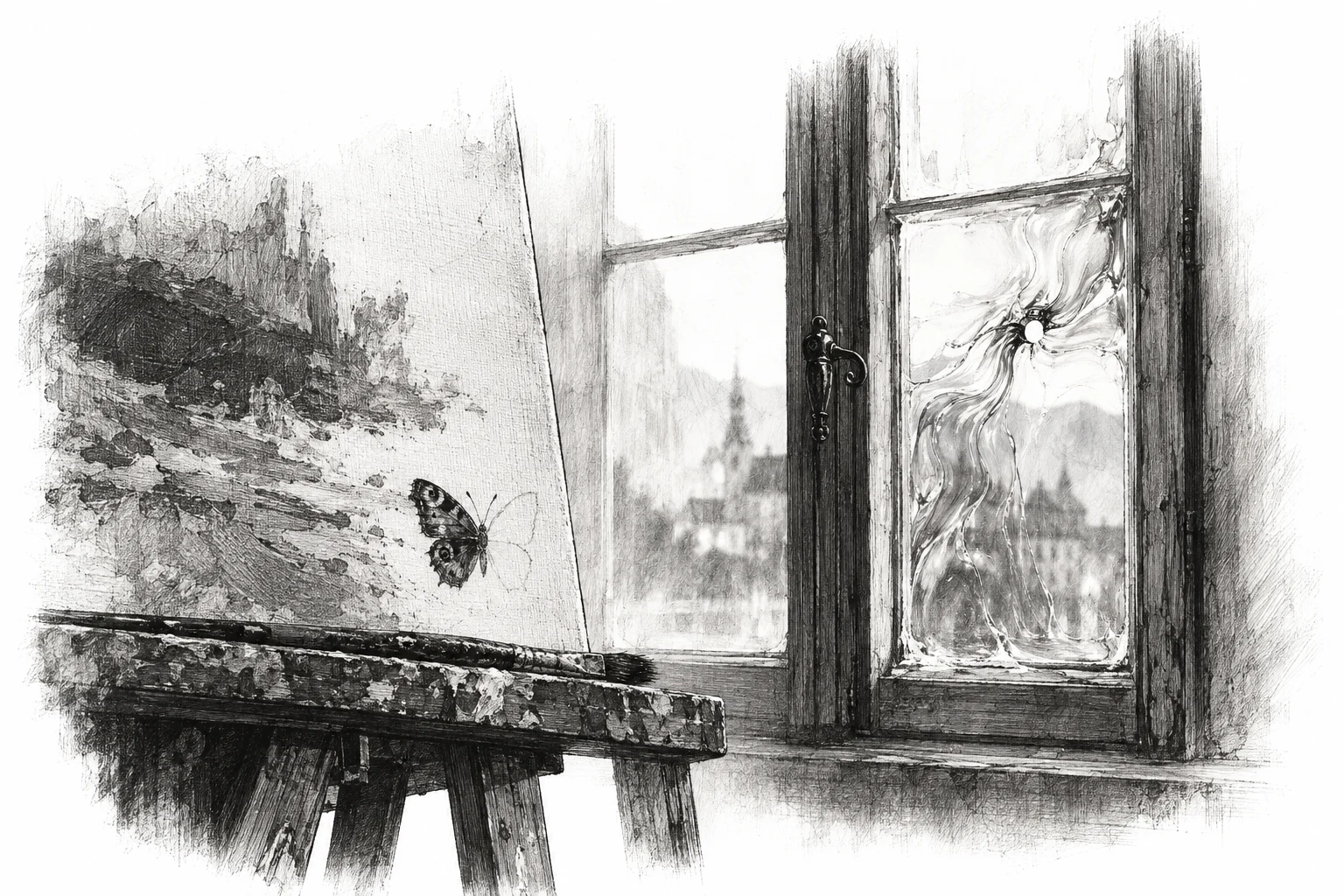
The Prelude lets us watch a report being assembled. The Postlude asks what its assembly has cost. Cups, a residency slip, an unpaid bill, and a short table leg keep interrupting the writers’ attempts to reach a final judgment. Practical work remains when interpretation has run out.
The fourth Faustian turn
The cycle proposes a further turn in the Faustian bargain: a pact made with oneself. The artist or writer promises to finish, repair, or justify a life before allowing ordinary life to resume. Such a promise can become its own captivity. The decisive question is whether the worker can stop without pretending the work is complete.
Zeitblom, Adrian, and the withheld friendship
Zeitblom’s relation to Adrian Leverkühn gives his presence a personal cost. The Postlude revisits what the editors excluded, what survived in a draft, and what a witness may borrow from another life. Its passage toward the world of Thomas Mann’s Doktor Faustus is an invented literary crossing, not a biographical claim about Mann or a historical meeting.
Julia retains her own hand
Julia’s writing, drum stroke, and story enter the editors’ work as acts with their own authorship. She is neither a reward for Hermann’s art nor a convenient source of absolution. The Postlude returns the question of completion to the people whose lives would otherwise be made to serve it.
The form of the return
The twelve sections rotate through the Unreliable Editor, Zeitblom, and AFW four times. Objects answer the Prelude under altered conditions. Reverse correspondences and contrapuntal returns support a reading of inversion; the text does not supply a documented musical pitch row for the Postlude. A strict twelve-note inversion should therefore not be claimed.
Thirty-nine pages, and a limit
The published Postlude is set in thirty-nine pages in each language. The number gathers the author’s concerns with duration, news, punishment, and the possibility of a stopping point. A designed extent is not evidence that the three novels depict exactly thirty-nine days. The guides distinguish the enacted form from numerical associations.
An ending that changes the next beginning
The last return does not undo the deaths. It changes the work of the living: a cup moves farther from a page; a folded document is released from under a table leg; a pen is put down. What can be corrected is smaller than what the editors wanted to save. It still matters.